A maritime-first vc
The future of global stability is decided at sea.
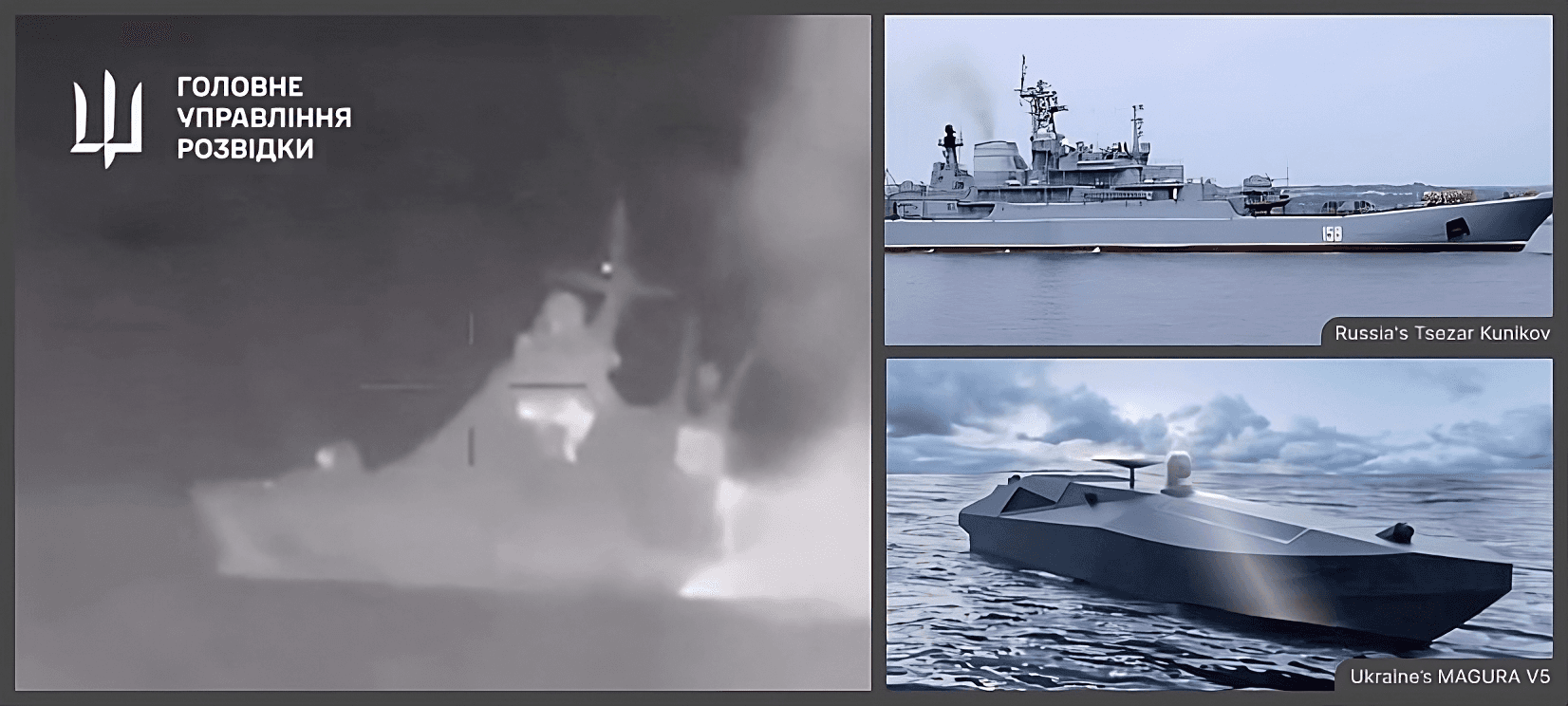
Stability at sea is the foundation of the modern economy. Maritime power shapes global peace and prosperity. China, Russia, and Iran are increasingly encroaching on freedom of the seas by expanding their maritime activities and territorial claims. In response to Russia's blockade in the Black Sea, Ukraine was forced to improvise a “mosquito navy” comprised of fast, autonomous boats, marine drones, and jet skis. The Houthis have used underwater drones and ballistic missiles to target both warships and commercial shipping in the Red Sea, sinking MV Rubymar, a bulk carrier cargo ship. Maintaining safe and secure sea lanes requires a global coalition of public and private sector partners. Only by prioritizing maritime interests and pooling our resources can allied nations stay true to our values, protect our interests, and ensure a stable and prosperous future for everyone.
The backbone of global connectivity
Oceans power the world’s trade, data, and movement.
Outside of their geopolitical importance, the world's oceans are the cornerstone of international trade and commerce. Oceans transport 90% of globally traded goods. Undersea fiber optic cables facilitate the transmission of 99% of international data traffic. Today, thousands of satellites orbit high above the Earth. They have changed how people connect with the oceans. Ships at sea now have internet connectivity that is 2,000 times faster and at one-third of the cost. This will continue to revolutionize the transportation goods, leading to faster, more affordable, and safer global trade. Despite these advancements, our maritime infrastructure remains vulnerable and brittle. Maritime disruptions, such as the Global Supply Chain Crisis in 2021 and the Red Sea Crisis in 2023, have ripple effects on the global economy.
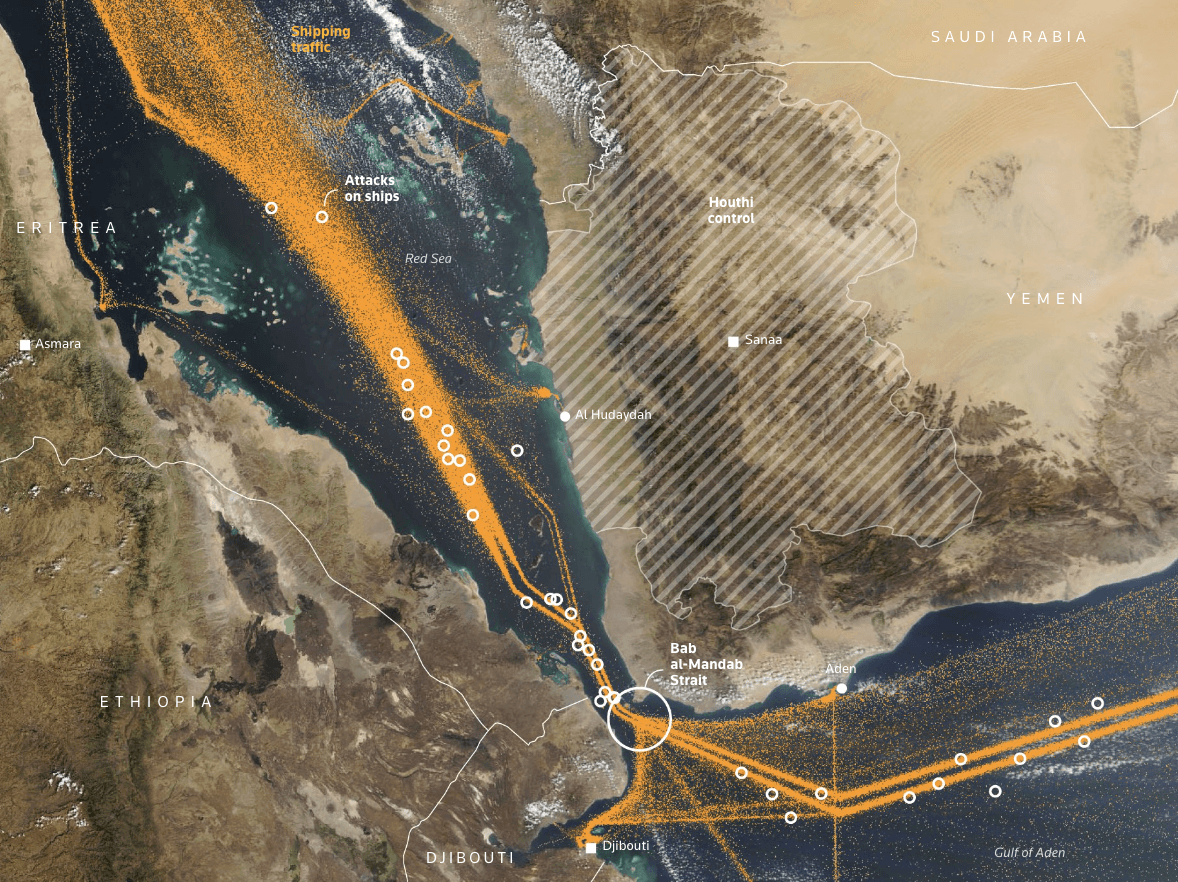
12% of Global Trade and 30% of Container Traffic traverses through the Suez Canal. The Houthis have attacked 43 ships in the area and hit 21, driving 3x increase Global Container Prices since October 2023 (Reuters, NASA, Terra/MODIS).
A shared natural system
Ocean health is inseparable from human survival.
Beyond its economic and strategic significance, the sea also plays a crucial role in sustaining the ecological balance on our planet. The diverse ecosystems found within the ocean support an abundance of marine life, including species essential for our survival. However, these ecosystems are under threat from various forms of environmental degradation, including dark fleets' illegal fishing, overexploitation, and habitat destruction. Urgent action is needed to mitigate these impacts and safeguard the health of our oceans for present and future generations.
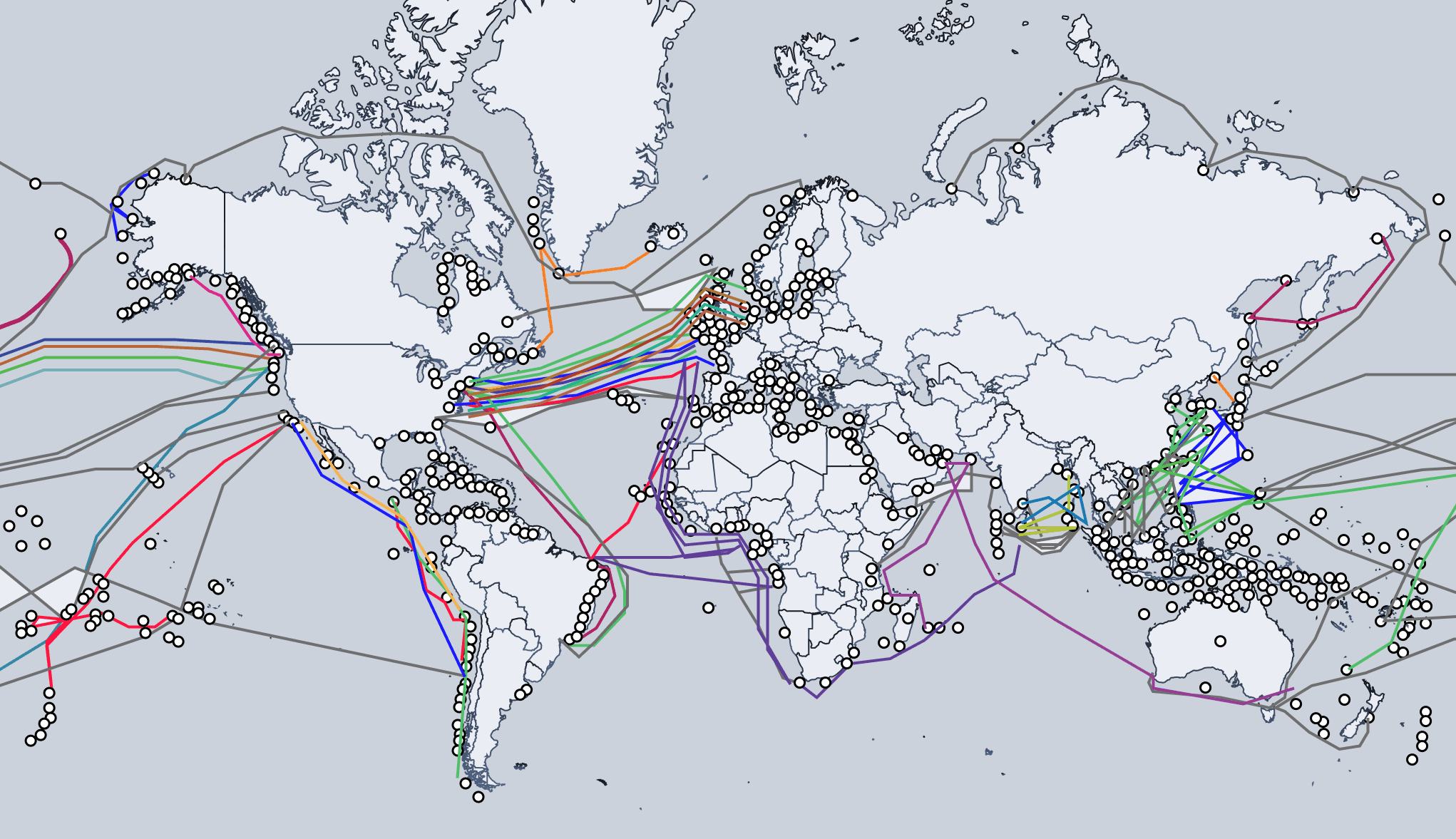
Map of Submarine Cables carrying 99% of international data. The deepest cables can reach over 30,000 feet below the surface (TeleGeography).
Freedom of the sea
Investing in the assets that sustain maritime security and trade.
Changes in maritime security, global trade, and the growing energy demand, coupled with limited private market investment in the US in target markets, highlight the need for critical investments to modernize our maritime capabilities and infrastructure. Our business at Mare Liberum ("freedom of the sea") focuses on investing in the strategic assets necessary for a global coalition of partners to maintain free and open seas. Our Fund invests in maritime assets and capabilities that will be critical in response to three key inflection points:
1. Challenges to maritime security driven by asymmetric naval warfare
2. Global Trade and Supply Chain Realignment away from China
3. Increasing Ocean Exploration Driven by the Energy Transition and Rising AI Energy Demands
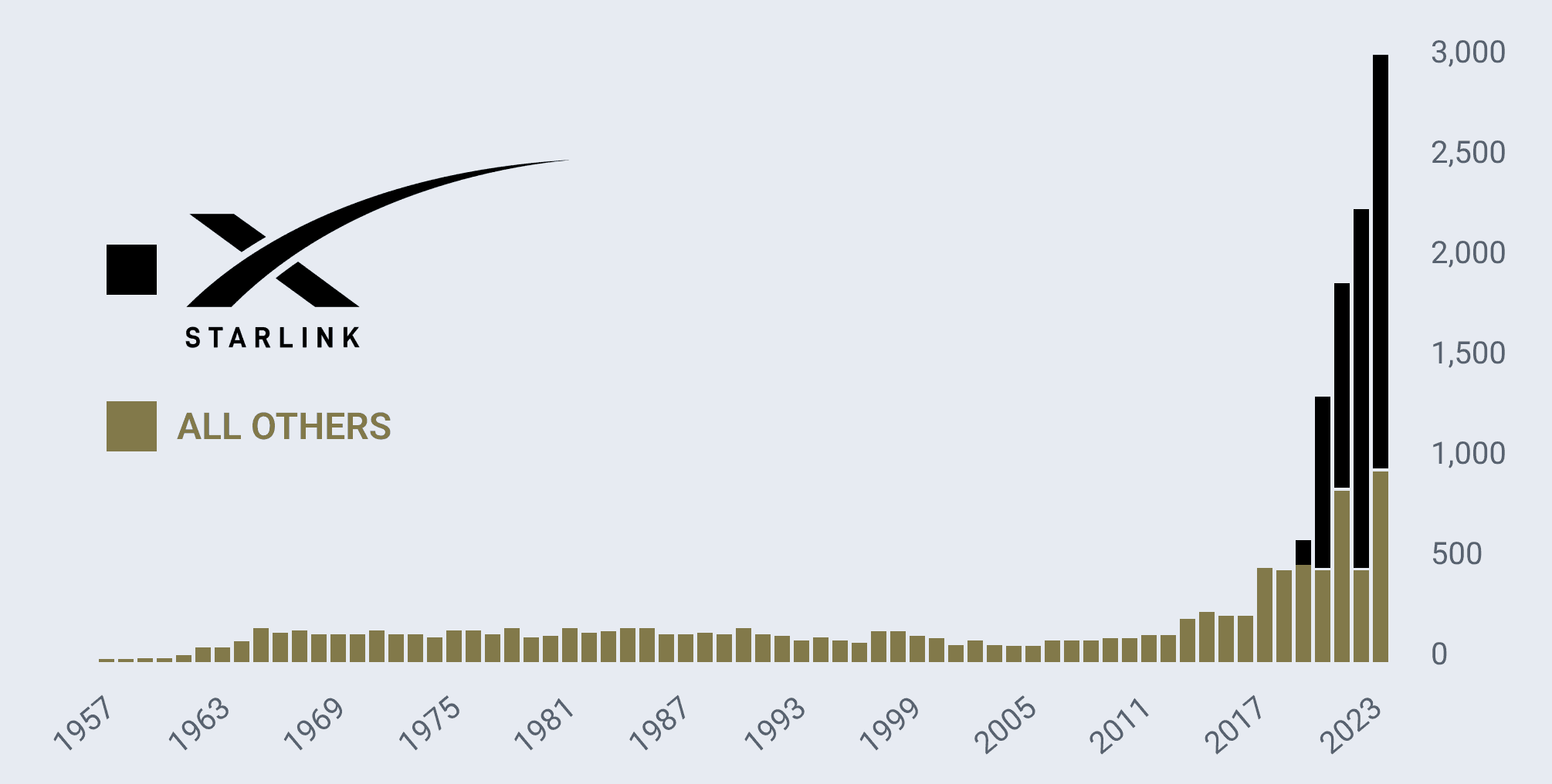
The exponential increase in satellites launched into space, primarily driven by SpaceX's Starlink, is redefining ocean connectivity (Infonomea)
From thesis to action
Investing in the capabilities that preserve freedom of the seas.
Strategic investments in areas like unmanned and autonomous systems, maritime cybersecurity, modern shipbuilding, and emissions reduction are necessary to adapt to these evolving changes. These investments not only strengthen deterrence but also promote collaboration among allied nations. Only by investing in critical maritime assets and capabilities can nations uphold their autonomy and preserve the freedom of the seas for future generations. Mare Liberum remains committed to making investments that enhance maritime security and global prosperity.
Experienced leadership